Read the Road Before You Read the Reviews: How Your Own Streets Should Shape Your Next Car
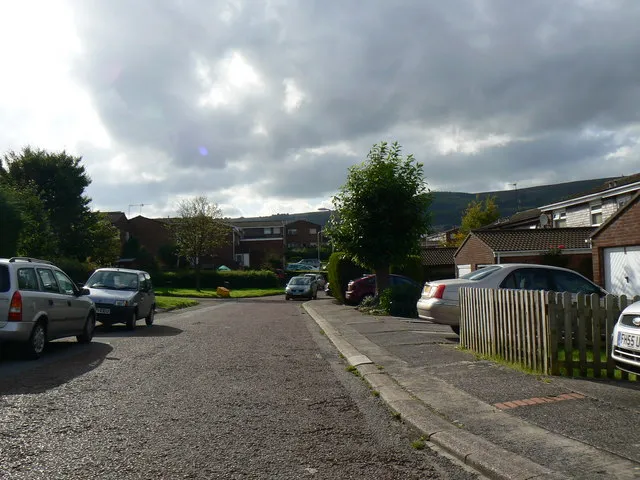
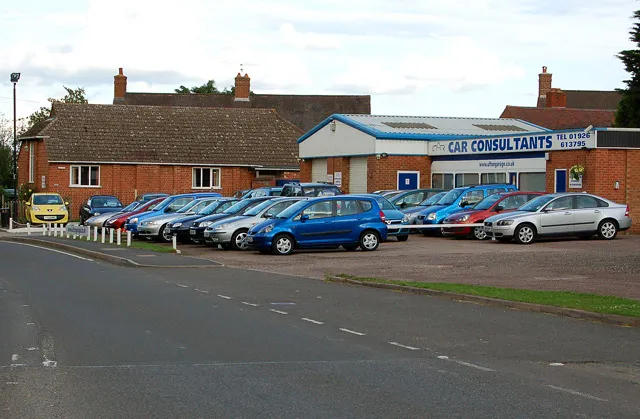
Photo: Colin Madge, CC BY-SA 2.0, via Wikimedia Commons
Most British car buyers begin their research the same way: a review video, a comparison site, a spreadsheet of fuel economy figures. Yet the environment in which a car will actually spend its life is rarely examined with the same rigour. The result is a familiar pattern — a well-reviewed hatchback that scrapes its chin on every speed cushion in the parish, or a sleek saloon whose front splitter meets its match on a farm-track shortcut.
The remedy costs nothing but an hour of observation. Call it a neighbourhood audit: a deliberate survey of the roads you use most, conducted before you ever book a viewing.
What to Look For on Your Own Patch
Start with the vertical obstacles. Speed cushions, sleeping-policeman humps and raised junction tables punish low front overhangs and long wheelbases. If your commute threads a ribbon of cushions on a residential estate, note their height and spacing — they will dictate a ground clearance and wheelbase tolerance that no spec sheet will volunteer.
Next, consider width. Rural single-track lanes with passing places, terraced streets with cars parked on both sides, narrow stone bridges: all of these reward mirrors that fold electrically, sensors that actually help, and a body width you can live with daily. A car that feels effortless on a dual carriageway can become a weekly trial on a Devon lane or a Glasgow tenement street.
Then there is the question of gradients and surfaces. Steep residential hills change the calculus around automatic gearboxes, diesel versus petrol, and — increasingly — electric range estimates, which are typically quoted on flattering test cycles. Unmade roads and potholed backstreets argue for sensible tyre sidewalls over oversized alloys that look superb on a forecourt and suffer on a Cumbrian B-road.
The Car Park Test
Few environments expose a car's true dimensions like a British multi-storey or a packed retail-park car park. Measure or estimate the height restriction at your regular car park — roof boxes, roof rails and even aerials have humbled many owners. Note the bay widths, the tightness of the ramps, and how easily you could negotiate them in reverse.
If you rely on public charging, add the positioning of your nearest chargers to the audit. An EV with a charging port at the front-left is a different proposition to one with the socket at the rear when the cable reach at your local hub is a metre short.
What Fleet Managers Already Know
Private buyers might be surprised to learn that fleet operators solved this problem years ago. Before specifying a single vehicle, professional fleet managers map duty cycles: the exact routes, mileages, load profiles and parking constraints their drivers face. A van serving inner-city deliveries is specced differently from one covering rural postcodes, and the difference is rarely about badge or brand — it is about route.
There is no reason a household cannot borrow the same discipline. Sketch your typical week: the school run, the weekly shop, the monthly motorway trip to see family, the annual towing of a trailer to the tip. Each leg carries requirements — motorway refinement and driver-assistance systems for the long haul, compact dimensions and visibility for the school gate, load space for the tip run.
Your Neighbourhood Audit Checklist
- Speed humps and cushions: count them on your main routes; note height and spacing.
- Lane width: identify the narrowest stretch you drive weekly, including parked cars.
- Gradients: note any steep hills you climb daily, particularly in winter.
- Parking: measure your drive, garage opening, or regular bay — including height.
- Junctions: consider sightlines at your most difficult junction; thick pillars matter here.
- Surfaces: unmade or potholed roads favour taller sidewalls and robust suspension.
- Charging and fuel: map your nearest chargers or fuel stations, and note access constraints.
From Audit to Shortlist
Once complete, the audit becomes a filter. It will eliminate some fashionable choices and elevate some unfashionable ones — often in favour of smaller wheels, a modestly sized body, or a bodystyle you had dismissed. It also sharpens the eventual test drive: instead of a generic loop around the block, ask to drive a route that includes your worst local obstacle, whether that is a cushioned estate road or a multi-storey ramp.
The best car for you is not the one that tops a review aggregator. It is the one that fits the geography you actually inhabit. Britain's roads are idiosyncratic — humped, narrow, cobbled and crowned — and the buyers who study them first tend to buy more happily, and keep their cars longer.