Running a Leaner Fleet: Where UK SMEs Leave Money on the Table

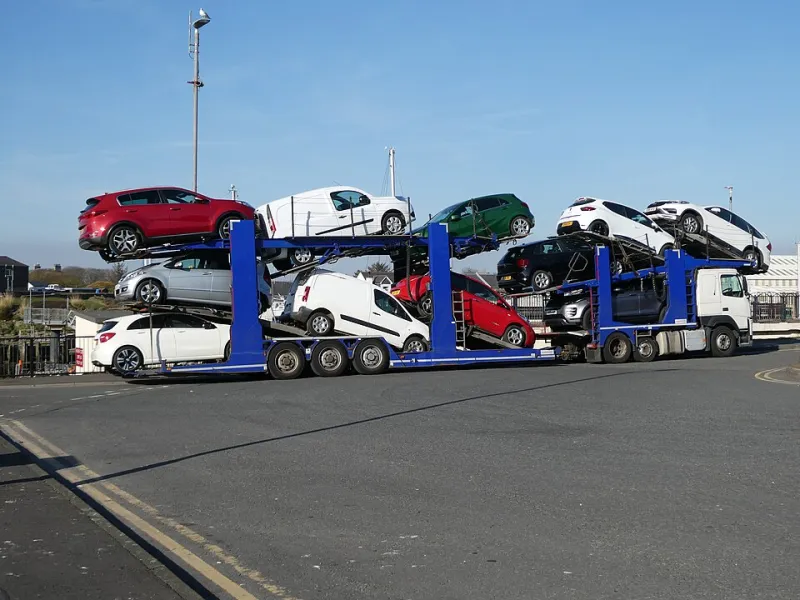
Photo: Sandy B , CC BY-SA 2.0, via Wikimedia Commons
Ask a finance director what their biggest controllable overhead is and few will say the fleet. Vehicles tend to sit on the balance sheet as a line item, renewed on autopilot every three or four years. Yet for many UK SMEs — from regional building firms to last-mile delivery startups — the fleet is the second or third largest recurring cost after payroll and premises.
The good news? Unlike payroll, fleet costs respond remarkably well to scrutiny.
Whole-Life Costing: The Number Most Businesses Never Calculate
The purchase price of a van or car is the tip of the iceberg. What actually matters is the whole-life cost: depreciation, fuel or charging, servicing, tyres, insurance, and the inevitable downtime when a vehicle is off the road.
Consider two nearly identical panel vans. One costs £1,200 less up front but sits in a higher insurance group, drinks noticeably more fuel on urban routes, and has a patchier service network in your region. Over a four-year term, the "cheaper" van can easily cost thousands more. Businesses that benchmark on whole-life cost rather than headline price routinely uncover savings of 10–15% without changing a single vehicle.
Leasing or Buying: It Depends on Your Cash, Not the Salesman
There is no universal answer, but there is a useful rule of thumb.
- Leasing (contract hire or finance lease) suits businesses that value predictable monthly costs, want to avoid residual value risk, and would rather deploy capital elsewhere. It also keeps vehicles off the capital expenditure conversation entirely.
- Buying outright makes sense when cash is abundant, annual mileage is low, or you plan to run vehicles well beyond the typical lease term. Depreciation is yours to manage — for better or worse.
- Hire purchase occupies the middle ground, spreading cost while building an asset.
The trap is choosing based on monthly payment alone. A £50 difference per month tells you nothing about balloon payments, excess mileage charges, or maintenance inclusivity. Insist on comparing total contract cost, not instalments.
The Tax Reliefs Businesses Consistently Miss
HMRC offers several levers that go un-pulled far too often:
Capital allowances. Businesses purchasing low-emission vehicles can write down a substantial portion of the cost against profits in year one. Full expensing thresholds for zero-emission vehicles are among the most generous on the statute book — yet sole traders and partnerships routinely forgo them because nobody flagged it at the point of purchase.
VAT recovery. If your vehicles are used exclusively for business, you can generally reclaim the VAT on purchase or lease payments. Mixed-use vehicles complicate matters, but partial recovery may still apply. Many SMEs simply don't claim.
Class 1A NIC and benefit-in-kind planning. For company car schemes, CO2 emissions bands determine the employee's tax charge and the employer's NIC liability. Choosing the right emissions band at ordering stage — rather than defaulting to the petrol estate everyone has always had — can save both parties meaningful money over a three-year term.
A conversation with your accountant before signing a fleet contract, not after, is worth several hours of billable fees.
The Consolidation Question
Many SMEs source vehicles from one dealer, service them at a garage down the road, insure through a broker, and handle fuel cards via a third provider. Each relationship may be individually sound — but fragmentation carries hidden costs: duplicated admin, inconsistent service intervals, and no leverage when renewal time arrives.
Consolidating with a single automotive group changes the arithmetic. Pricing improves with volume. Service records live in one place, protecting residual values. When a van is off the road, a courtesy vehicle arrives without a week of phone calls. And because the group handles leasing, maintenance, and disposal together, whole-life data actually gets captured — which is what makes the next renewal negotiation informed rather than hopeful.
A Ten-Point Fleet Audit Checklist
Run your current arrangements through this list. Every "no" or "don't know" is a potential saving:
- Do you know the whole-life cost per vehicle per mile?
- Have depreciation and residual values been modelled, not guessed?
- Are servicing intervals tracked centrally or from memory?
- Is every vehicle on the correct fuel/charging profile for its actual routes?
- Have capital allowances been claimed on all qualifying purchases in the last two tax years?
- Is VAT recovery being maximised on lease payments?
- Do you know each vehicle's real annual mileage against contract allowances?
- Are insurance groups reviewed at ordering stage, or accepted as given?
- Is there a single point of accountability for fleet admin?
- Do you have consolidated data to negotiate with at renewal?
Start With the Data You Already Have
Fleet optimisation doesn't require a consultancy engagement. It requires someone to pull together twelve months of fuel, service, and finance figures and ask honest questions. For most businesses, the answers reveal that the fleet was never a fixed cost at all — just an unmanaged one.
If you would like a structured review of your current arrangements, CarCo Group's fleet team works with businesses of every size, from half a dozen vans to national contracts. The first conversation costs nothing but an hour.