Behind the Curtain: The Quiet Journey Your New Car Makes Before You Turn the Key
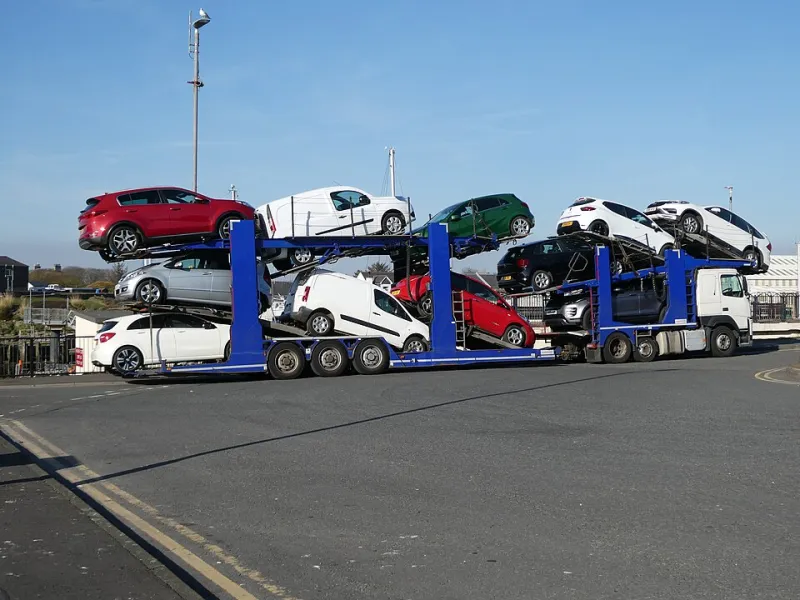
Photo: Billy McCrorie , CC BY-SA 2.0, via Wikimedia Commons
You sign the paperwork on a Tuesday. Ten days later, a car in the exact colour, trim, and specification you chose is parked on your drive with a full tank and a fresh number plate. It feels effortless. It is anything but.
The final chapter of a new car's journey involves ports, compounds, inspection bays, and government databases — and understanding it explains why delivery dates move, and why a good retailer is worth their weight in gold.
Stage One: The Factory and the Compound
Once your car rolls off the production line, it enters a world of logistics most buyers never consider. UK-bound vehicles from European factories travel by road on enclosed transporters or, more commonly, by sea — stacked in car carriers bound for ports such as Southampton, Immingham, or Portbury.
At the port, vehicles are transferred to a compound where they may sit for days or weeks. This is where much of the pre-delivery work happens: protective films applied or removed, wheels checked, and — for cars arriving from the Continent — conversion to UK specification, including speedometer calibration in miles per hour and headlamp beam adjustment for left-hand driving.
Delays here are the most common reason a promised delivery date slips. A single storm in the Channel or a backlog at a port can push thousands of vehicles back by days. No amount of retailer persuasion changes this — which is why honest dealers under-promise rather than the reverse.
Stage Two: The Pre-Delivery Inspection
Before any car reaches a customer, it undergoes a pre-delivery inspection (PDI) — a structured checklist covering dozens of individual points. This is not a token glance around the car. A proper PDI includes:
- Verifying build quality against manufacturer standards, panel by panel
- Checking fluid levels, brake function, and tyre pressures
- Testing every electrical system, from infotainment to driver assistance features
- Road testing to confirm the car drives as it should
- A meticulous valet, often including paint correction for any transport blemishes
At a group-level operation, PDI technicians are manufacturer-trained and work to audited standards. If a fault is found — and occasionally one is — the car is rectified before handover, not after. A scratch discovered in your driveway is a frustration; the same scratch caught in the inspection bay is a non-event.
Stage Three: Registration and the Paperwork
Here is the step that surprises many first-time buyers: your car doesn't legally exist as yours until it's registered. The retailer submits the first registration to the DVLA, either electronically or via the V55/5 form, and this is what generates your registration number, tax status, and the vehicle's entry into the national record.
Number plates are manufactured to the registered mark and fitted — front and rear, in the prescribed font and spacing. Alongside this, the retailer prepares the handover pack: the V5C logbook (which typically follows by post), warranty documentation, service plan details, and finance agreements if applicable.
It is unglamorous work, and it is precisely where smaller or less organised operations stumble. Miss a DVLA detail and your road tax or insurance can be delayed; at CarCo, this administration sits with dedicated staff whose only job is getting the documents right the first time.
Stage Four: The Handover Itself
By the time you arrive at the dealership — or the car arrives at your door — everything should already be done. The best handovers are less about ceremony and more about substance: a walkthrough of the car's features, pairing your phone, setting driver profiles, explaining the charging routine if you've gone electric, and making sure your first service is booked.
The handover is where a dealership proves it is a service hub rather than a salespoint. The sale ended weeks ago; what follows is the relationship that lasts the length of your ownership.
Why It Matters to You
Knowing what happens behind the scenes changes how you buy. Ask when the car is due into the country, not just when it's due to you. Ask whether the PDI is done on site and by whom. Ask who handles the DVLA registration. The answers reveal far more about a retailer than any showroom ever will.
A new car is the second most expensive thing most people ever buy. It deserves a journey to match — and now you know what that journey looks like.