Second Fiddle No More: Giving the Family's Other Car the Attention It Deserves
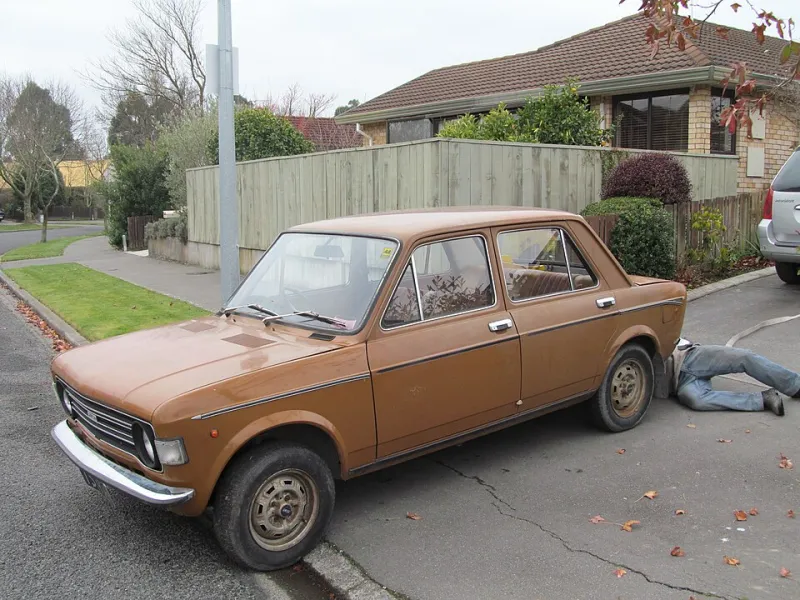
Photo: Riley from Christchurch, New Zealand, CC BY 2.0, via Wikimedia Commons
Ask most British households which car is 'the' family car and they will point to the newest one on the drive. The other vehicle — often older, smaller and bought in something of a hurry — is treated as an afterthought. Yet look honestly at the mileage log and a different picture emerges. The so-called second car frequently does the 3pm school pickup, the Saturday trip to the garden centre, the run to the station and the ferrying of grandparents to hospital appointments. It is, in practice, the workhorse.
The Car Nobody Planned
There is a familiar pattern to how these cars arrive. A household upgrades its main vehicle, and rather than sell the old one, keeps it 'for the school run'. Or a growing family decides two cars are essential before genuinely working out whether that is true. Either way, the decision is made by default rather than design — and that is rarely how the savviest buyers approach a five-figure commitment.
The consequences are practical as well as financial. A car chosen as an afterthought tends to be badly matched to its actual duties. A low, sporty coupé with two doors and a boot the size of a shoebox is a miserable tool for the weekly shop and a child's buggy. A hulking SUV that never leaves suburban streets costs more to run than the tasks demand.
What the Second Car Actually Does
Before deciding whether to run one car or two, it is worth auditing the real workload. For most UK families, the second car's duties fall into a handful of categories:
- The school run: short, stop-start trips of a mile or two, twice daily
- Errands: supermarkets, DIY stores, tip runs
- Caring duties: taking older relatives to appointments, collecting children from clubs
- The commute fallback: covering for the primary car when it is in for a service or, worse, off the road
That list tells you something important. The second car's life is dominated by short urban journeys. This has implications for fuel type — a diesel that rarely leaves town will choke its own DPF — and for reliability, since repeated cold starts are harder on an engine than a steady motorway cruise.
One Car or Two: The Arithmetic
The case for two cars is convenience; the case for one is cost. Running a second vehicle in the UK typically adds up as follows, using a modest five-year-old hatchback as an example:
- Depreciation: £1,200–£1,800 per year
- Insurance: £350–£600 per year
- VED and maintenance: £400–£700 per year
- Fuel: highly variable, but often £500–£900 for a low-annual-mileage runabout
That is a realistic £2,500–£4,000 a year for the privilege of a second set of keys. Against that, a household running one genuinely versatile car — a well-sized estate, a compact MPV or a mid-size SUV — may spend a little more on the single vehicle but saves the entire cost of the second. Add in the possibility of selling the spare car for several thousand pounds, and the argument becomes compelling for families whose schedules genuinely allow shared use.
Where two cars still make sense is when both adults commute in different directions, or when children's activities pull the household apart every evening. Convenience has a price; the question is whether you are happy to pay it knowingly.
If You Keep Two, Buy the Second Properly
For households that do need two cars, the second deserves the same scrutiny as the first. Choose for its actual duties rather than its badge. A small, efficient hatchback with a decent boot and easy doors will serve the school run and grandparent trips far better than a tired executive saloon. Reliability matters more than refinement on a car that does ten thousand stop-start miles a year, and a comprehensive warranty or an approved used scheme can remove much of the worry.
It is also worth considering whether the second car should be the more efficient of the two. If it is doing mostly short urban trips, a small petrol, a hybrid or — for those with a driveway — a modest electric car can slash running costs. A second EV doing 4,000 miles a year on cheap overnight home charging costs pennies per mile in electricity, and the lower maintenance burden of an electric powertrain suits a car that is often left standing.
The Verdict
The half-term holiday, when both cars sit on the drive or carry the family somewhere together, is a natural moment to take stock. If your second car spends most weeks idle, the numbers favour consolidation. If it earns its keep daily, it has earned a proper buying decision — one based on what it actually does, rather than what was left over after the main car was chosen.
Whichever way a household leans, the principle is the same: every car on the driveway should be there on purpose.